Don’t miss any live FIFA World Cup matches with these apps!
ad
The tournament promises exciting matches across different countries and stadiums.
Knowing where to watch every game makes the experience even better.
ad
In this article, you’ll discover platforms, apps, and important details about the competition.
👉 This article is for informational purposes only. Here you will find reliable apps with live game specifications.

Guide to Official Platforms to Follow the Tournament
The FIFA World Cup 2026 will have official broadcasts in different regions around the world.
Streaming apps and platforms may vary depending on your country and local broadcasting rights.
Below, you’ll discover the main services expected to stream every moment live.

FIFA’s official global platform
- FIFA+
North America
- FOX Sports App
- Peacock
- FuboTV
- YouTube TV
- CTV App
- TUDN App
- ViX
Europe
- BBC iPlayer (United Kingdom)
- ITVX (United Kingdom)
- ARD Mediathek (Germany)
Africa
- SuperSport App (Sub-Saharan Africa)
- beIN Connect (North Africa)
Middle East
- beIN Connect
Asia
- Disney+ Hotstar (South Asia, selected markets)
Oceania
- SBS On Demand (Australia)
To stay up to date with all official news, it’s recommended to have it installed on your phone.

How the New 48 Team Format Works
The FIFA World Cup 2026 will be the biggest in history.
For the first time, 48 national teams will take part, completely changing the competition’s dynamics.
The format works as follows:
- 48 teams divided into 12 groups of 4 teams
- Each team plays 3 matches in the group stage
Advancing to the knockout stage:
- the top 2 teams from each group
- the 8 best third-placed teams
As a result, the knockout stage begins with 32 teams, making every matchup even more decisive.
The margin for error shrinks, room for mistakes nearly disappears, and the group stage gains much greater strategic importance in shaping the road to the title.
In total, the tournament will feature 104 matches over 39 days, spread across different venues and time zones.
That means more football and more real chances for surprises throughout the competition.
Groups and Teams in the Opening Stage of the FIFA World Cup 2026
In this edition, the groups mix historic powerhouses and emerging teams.
| Group | Countries |
|---|---|
| Group A | Mexico / South Korea / South Africa / Czech |
| Group B | Canada / Switzerland / Qatar / Bosnia and Herzegovina |
| Group C | Brazil / Morocco / Haiti / Scotland |
| Group D | USA / Australia / Paraguay / Turkey |
| Group E | Germany / Ecuador / Ivory Coast / Curaçao |
| Group F | Netherlands / Japan / Tunisia / Sweden |
| Group G | Belgium / Iran / Egypt / New Zealand |
| Group H | Spain / Uruguay / Saudi Arabia / Cape Verde |
| Group I | France / Senegal / Norway / Iraq |
| Group J | Argentina / Austria / Algeria / Jordan |
| Group K | Portugal / Colombia / Uzbekistan / DR Congo |
| Group L | England / Croatia / Ghana / Panama |
Each group presents a different kind of challenge.
Some are defined by balance, others by historical weight, and a few where unpredictability could decide everything.
Host Cities and Key Venues
The FIFA World Cup 2026 will be held in three countries: the United States, Mexico, and Canada.
In total, there are 16 host cities across North America.
The United States hosts 11 venues, including Dallas, Los Angeles, Miami, New York/New Jersey, and Atlanta.
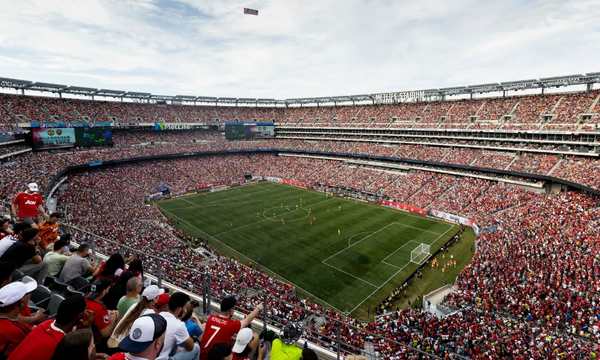
Mexico has three host cities:
- Mexico City — Estadio Azteca
- Guadalajara — Estadio Akron
- Monterrey — Estadio BBVA
Canada completes the map with:
- Toronto — BMO Field
- Vancouver — BC Place
The opening match will be played at the historic Estadio Azteca in Mexico City.
The final will take place at MetLife Stadium in New Jersey, one of the most modern stadiums in the world.
Two venues full of symbolism, connecting tradition and future in an edition designed to make history.
Where to Buy Tickets Online
Tickets for the FIFA World Cup 2026 must be purchased exclusively through official channels. The main one is FIFA.com/tickets.
To participate in ticket sales, fans need to create a FIFA ID. Sales take place in phases, including lotteries and first come, first served windows.
Tickets will be digital, linked to the official FIFA app, with a QR code used for stadium entry.
There are also hospitality and VIP experience packages, sold by FIFA’s official partners.

Prediction: Who are the Title Favorites?
Making predictions for the FIFA World Cup 2026 is never simple, but some names naturally stand out.
Among the top favorites are Brazil, Argentina, France, England, Spain, and Germany, teams with deep squads and strong tradition.
As strong contenders, we see Portugal, Belgium, the Netherlands, and African teams like Morocco and Senegal, who have been growing in recent tournaments.
The outsiders include host nations such as the United States and Mexico, as well as well organized teams like Japan, Ecuador, and Scotland.
With 48 teams, the trend is toward a more open World Cup, where details and consistency may matter more than pure favoritism.
Already feeling the excitement to follow every minute? The FIFA World Cup 2026 promises stories, encounters, and emotions that only football can create.


